June 16: Royal Monastery of San Lorenzo al Escorial + Gran Via
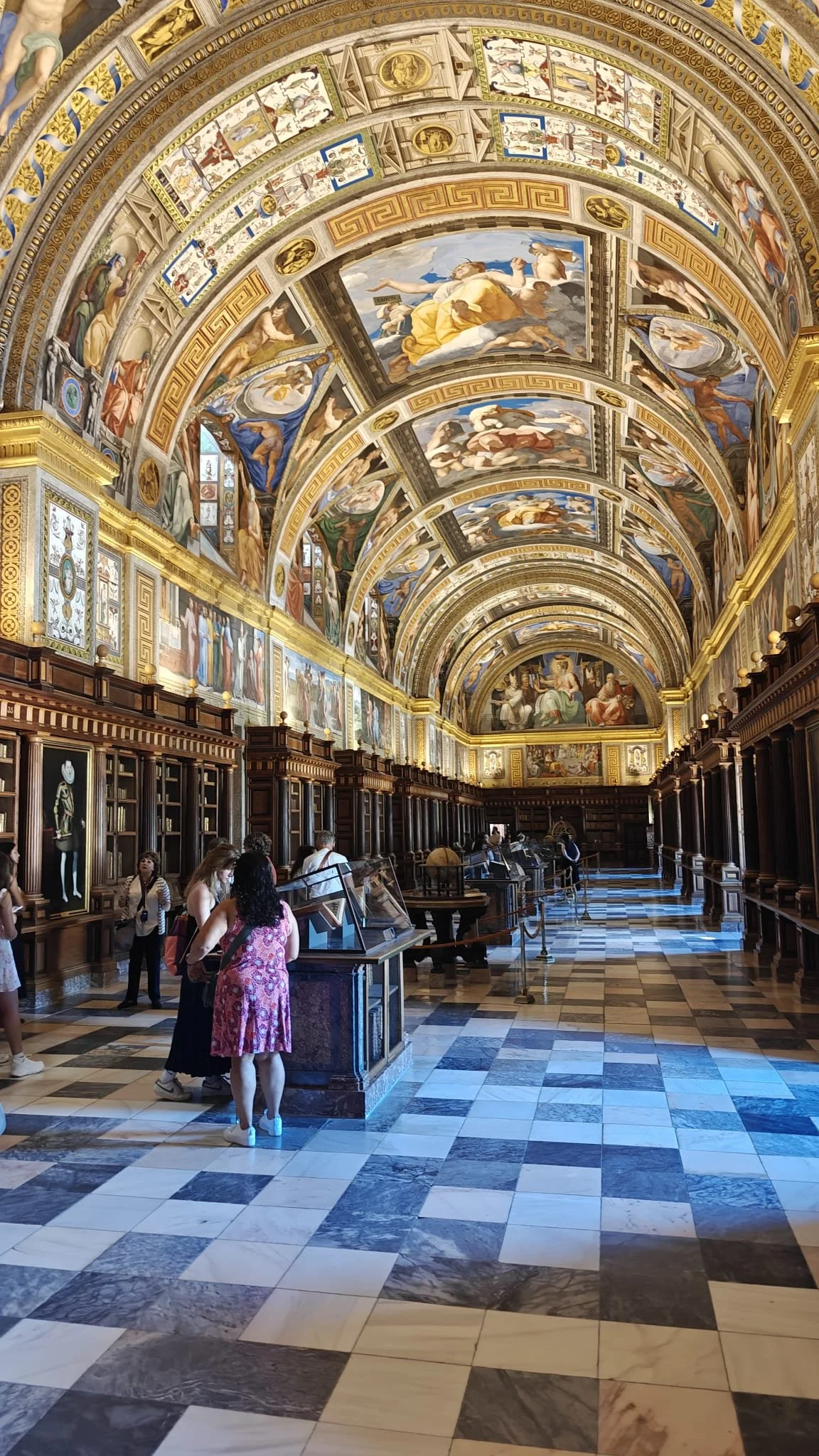
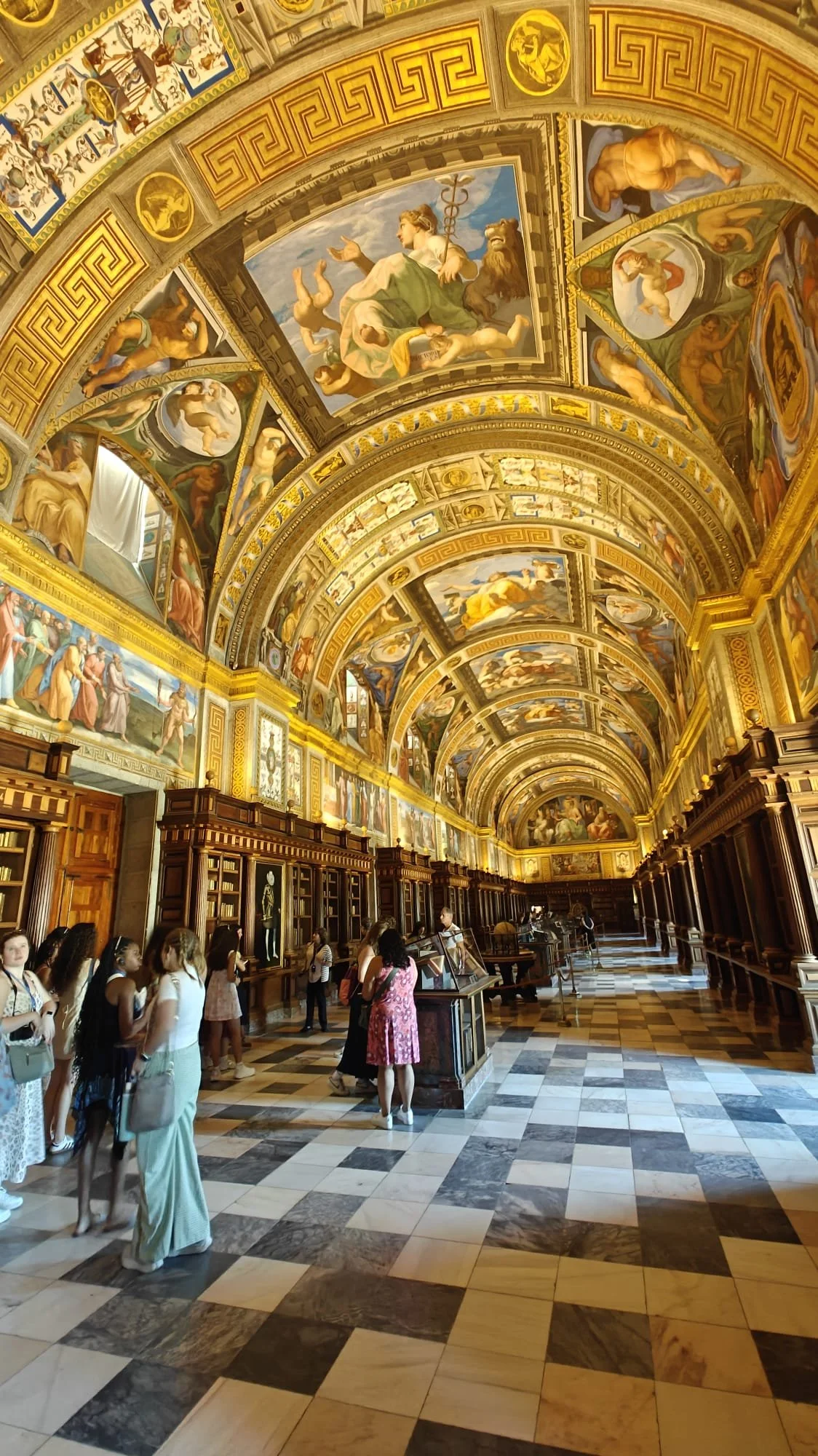
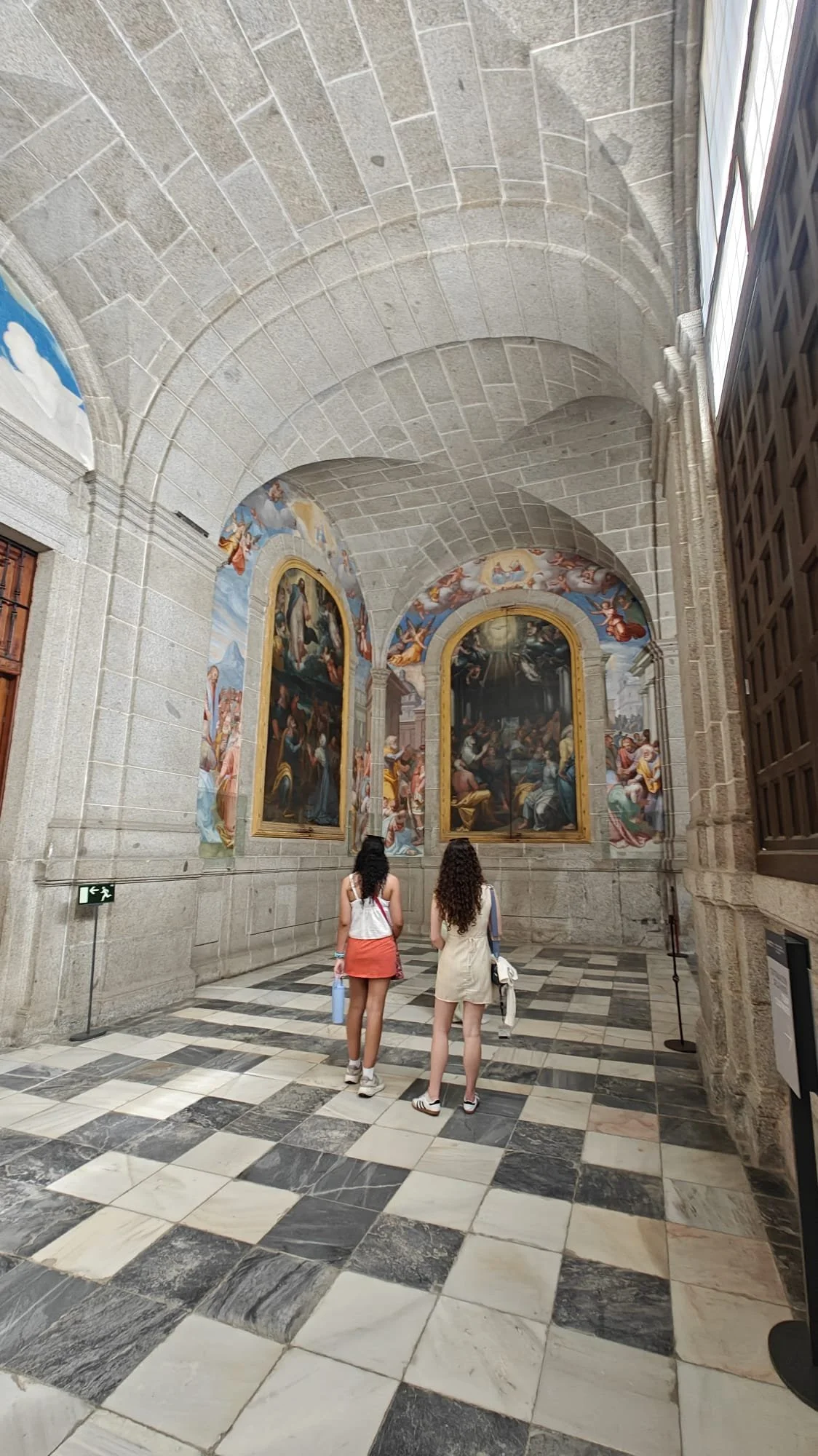
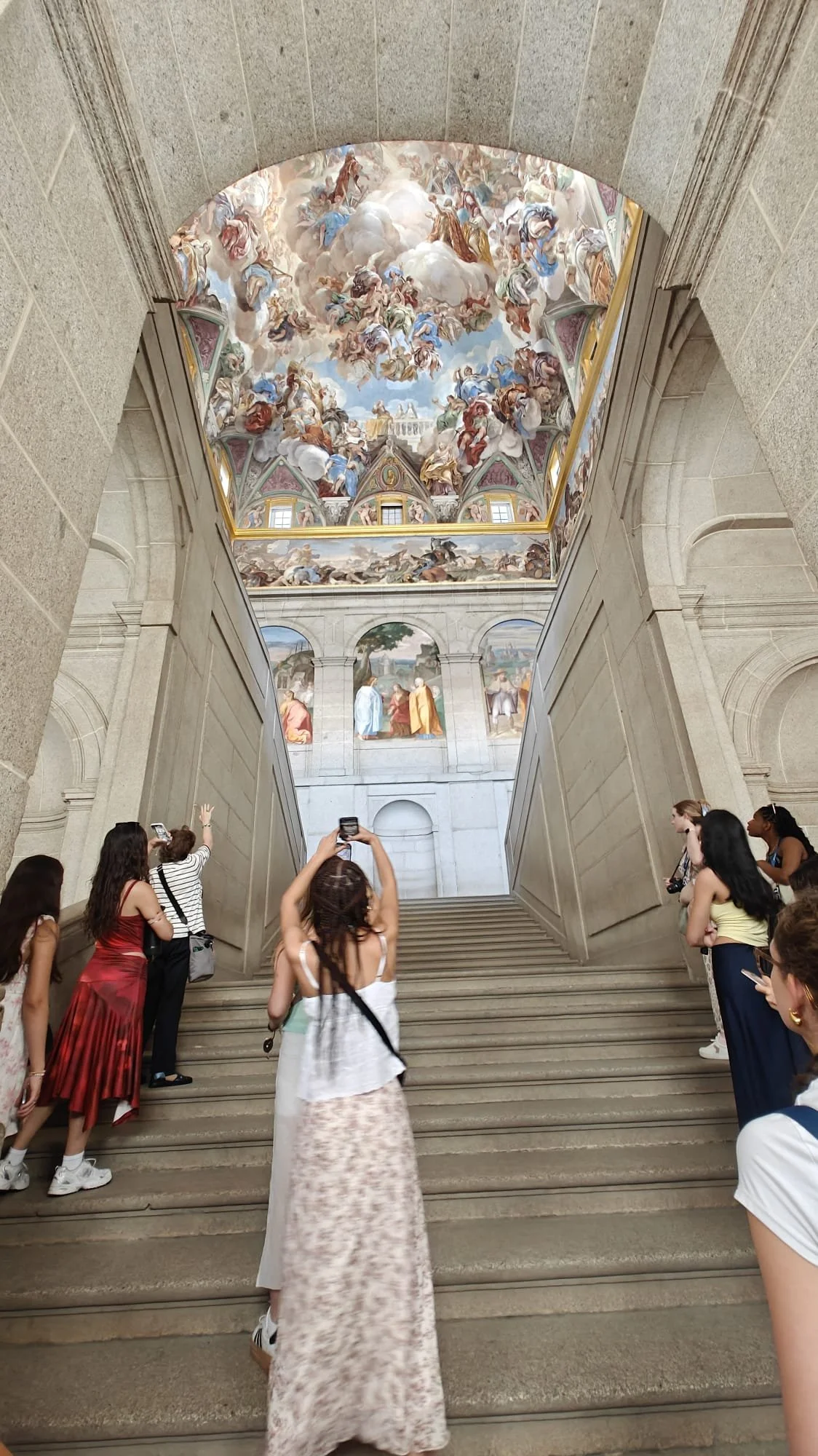
This morning we headed out on our last day trip, this time to the Royal Palace and Monastery of El Escorial. We arrived in a charming small town in the foothills of the Sierra de Guadarrama mountains and walked toward the imposing royal structure ahead. As we crossed the plaza, schoolchildren played soccer in the wide, open plaza - a simple, heart-warming scene that testified to the still active life of the monastery and its associated school. We had a lovely and funny tour guide who made the world of El Escorial come alive, although we all wished that she had let us spend another hour in the exceptional library.
With only two days left before we travel home, we are excited to see some of the greatest art museums in Madrid, which include many works we have studied in AHI, as well as many works that were originally housed in El Escorial, as our guide shared with us today. We are looking forward to every minute.
Reflection by Gracie Hillenmeyer
Today we visited El Escorial and had the opportunity to experience both the history and beauty of this remarkable monastery.
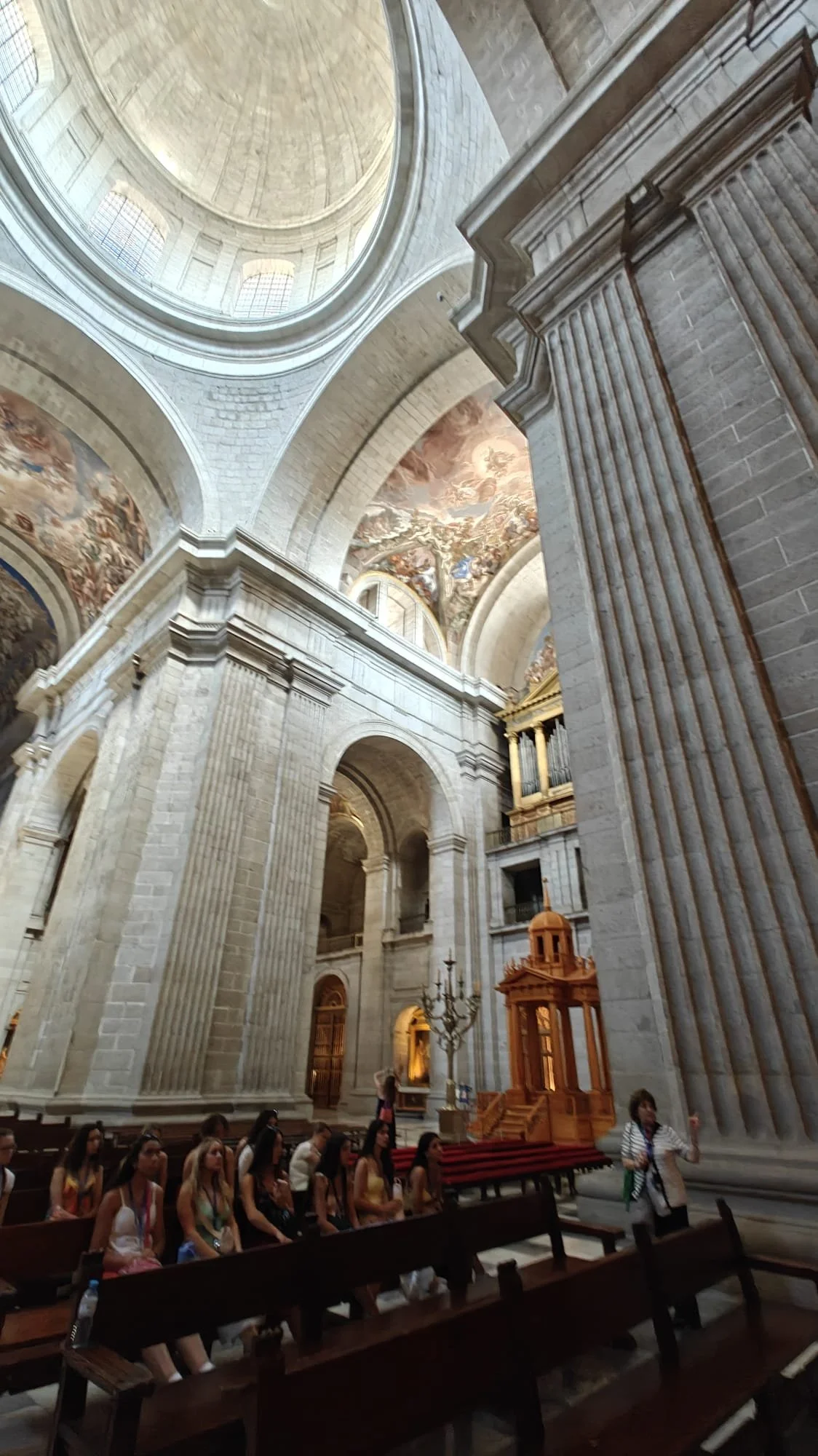
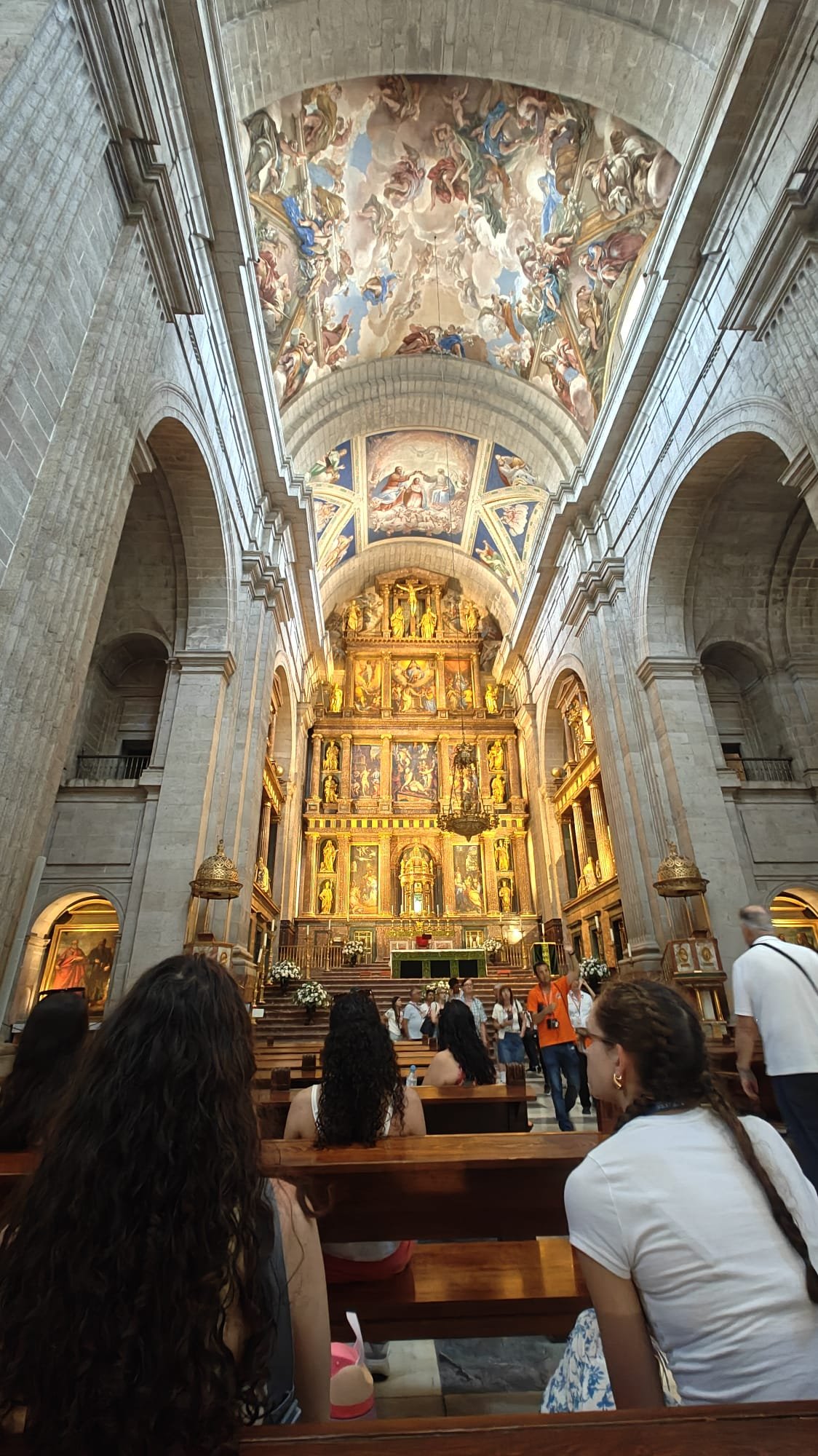
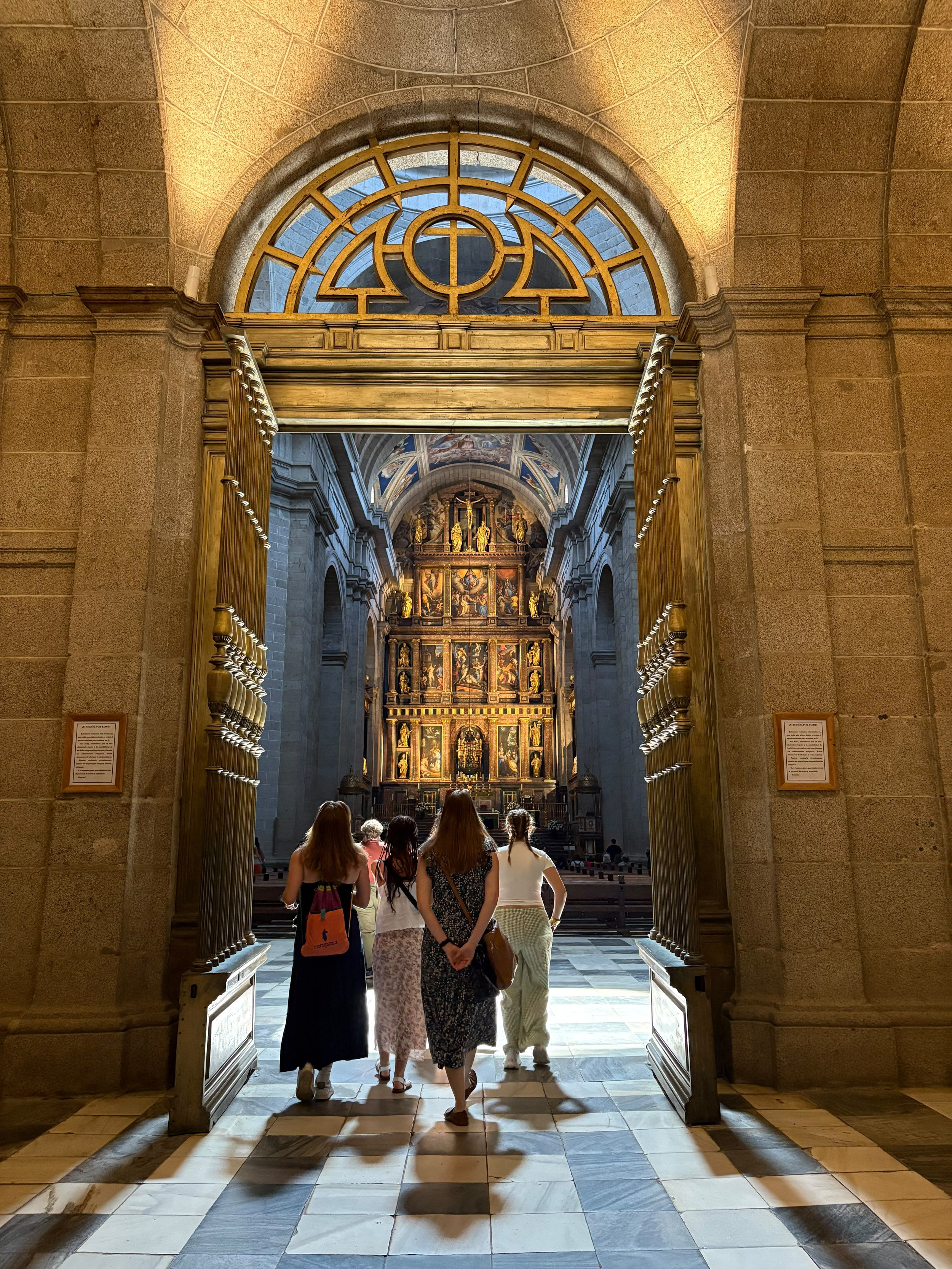
One of the highlights was exploring the library, filled with original books written in many different languages. We then visited the church, which was built in the shape of a Greek cross and decorated with breathtaking frescoes inspired by the Italian Renaissance.
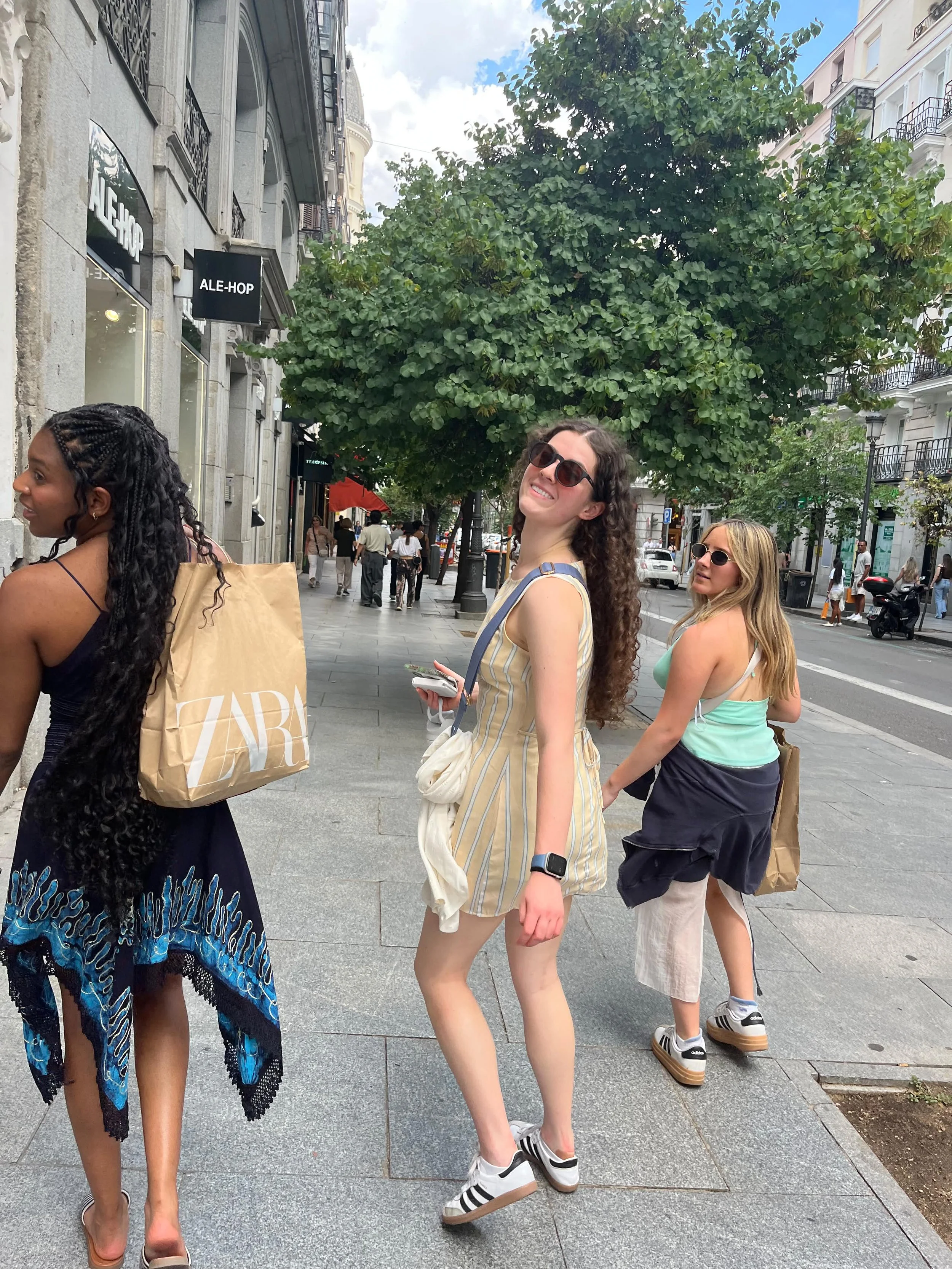
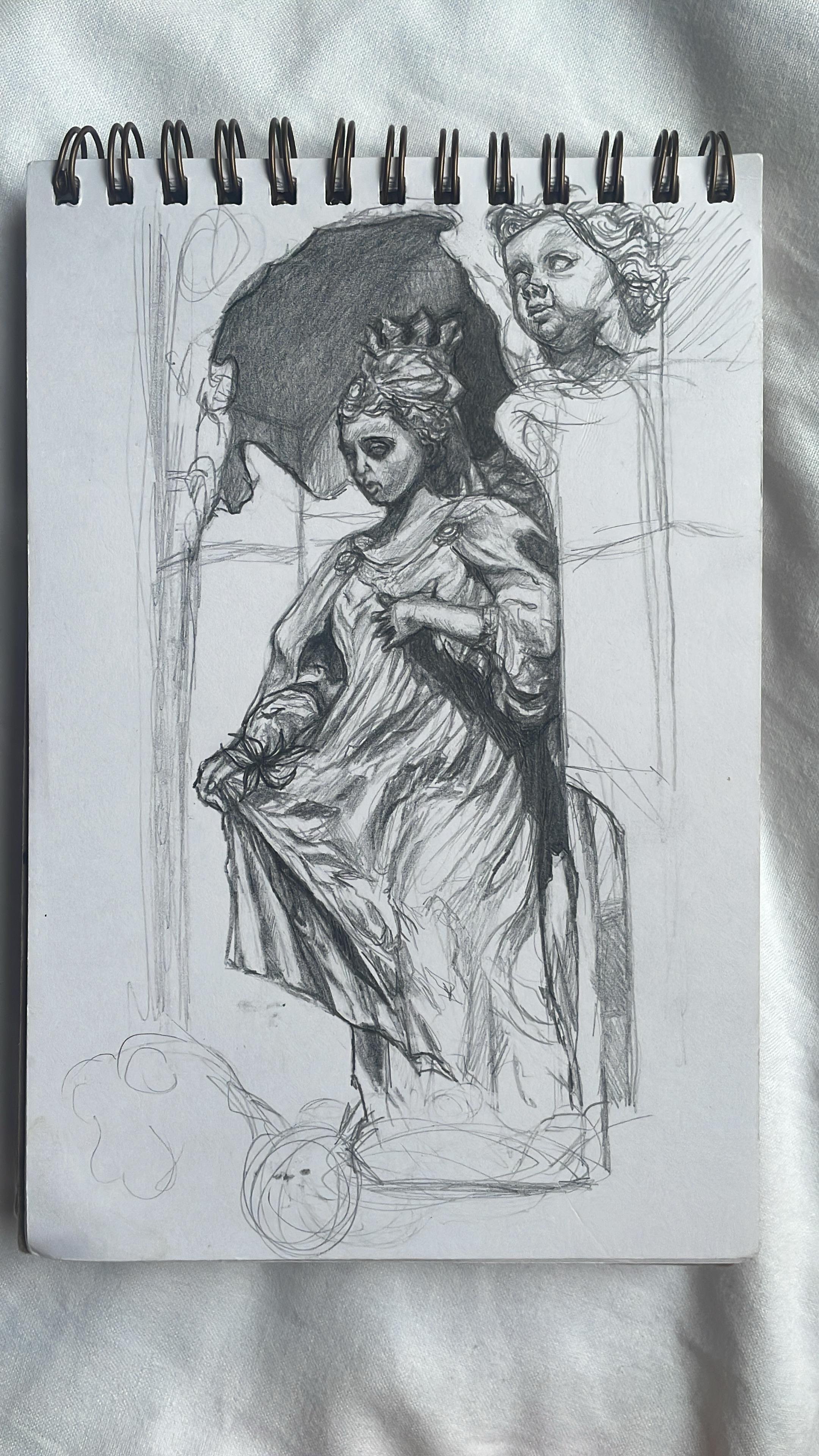
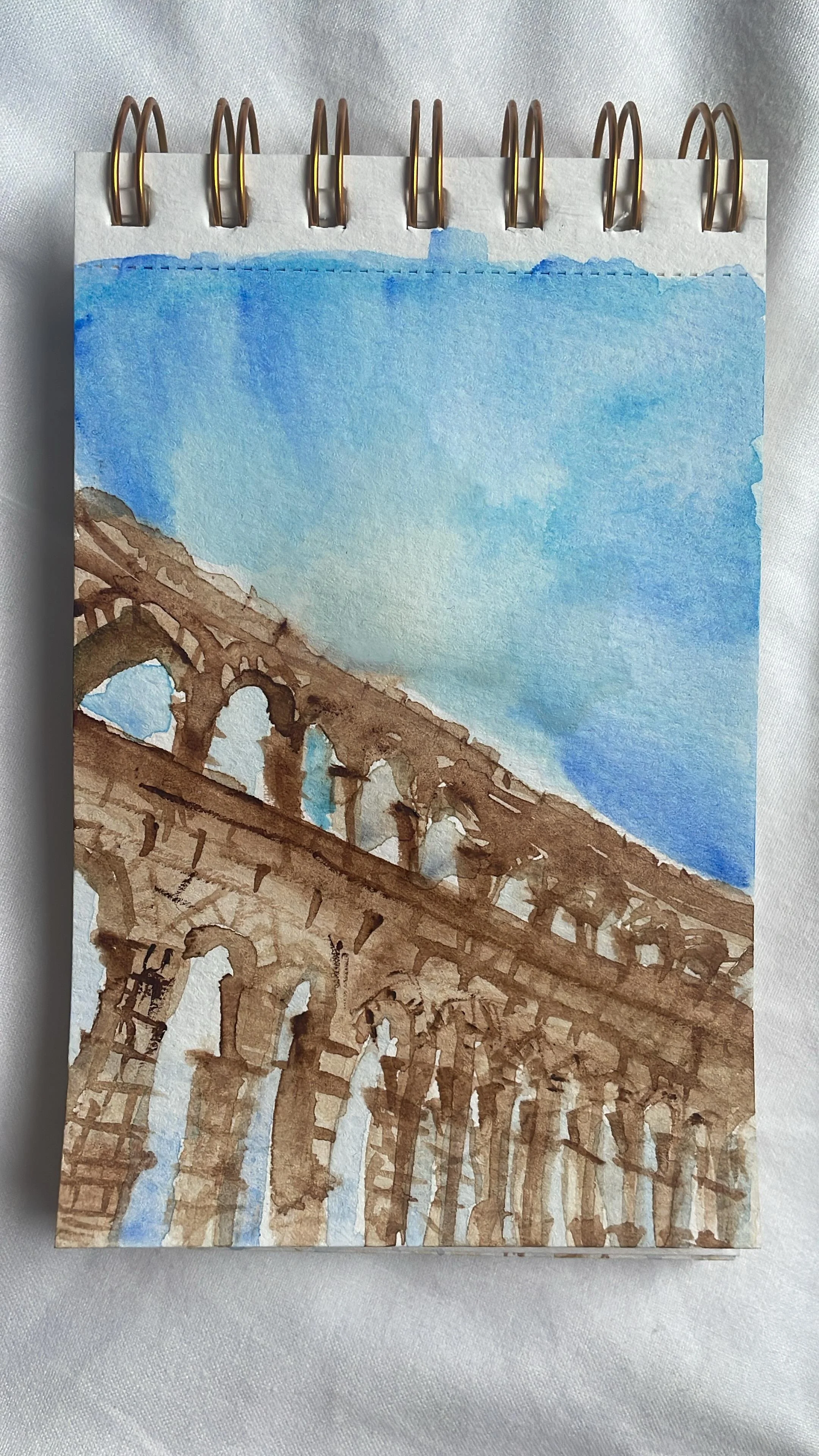
After returning to Madrid, we spent some time shopping and exploring before ending the day with a chance to relax and create art pieces on all we had seen so far!
Reflection by Julia Paul
The palace monastery of El Escorial shows how architecture was used to demonstrate power. Its enormous size and design reflect the authority and wealth of previous kings. The building was meant to impress visitors and reinforce the strength of the Spanish monarchy. El Escorial also reflects the close relationship between architecture and faith during the Renaissance. Its simple design expresses the importance of Christianity in a society. Today, architecture is still used to represent power and beliefs, but in different ways. Now, religious buildings don't play as big a role in public life, while cultural landmarks can symbolize political or national power.